Details still missing
Capture cargo, packages and open points in one brief. Keep unknown dimensions explicitly marked as unknown.
Putting together a complete event transport enquiry ↗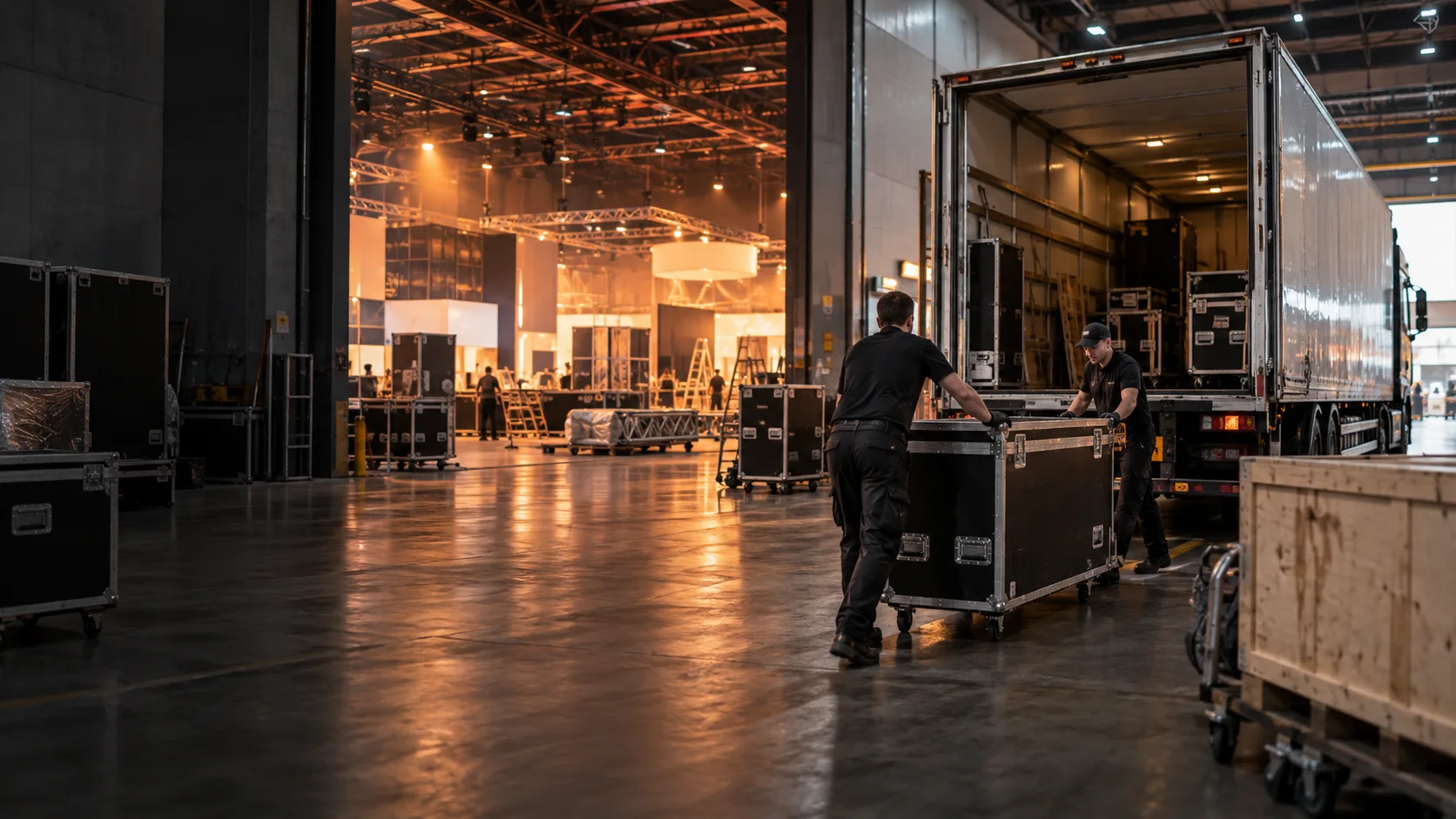
Exhibition and event transport
Choose the next unresolved decision. This guide moves from an initial brief through comparable quotations to confirmed handovers and destination details.
Capture cargo, packages and open points in one brief. Keep unknown dimensions explicitly marked as unknown.
Putting together a complete event transport enquiry ↗Give both providers the same quantities, timing and scope. Mark differences before comparing prices.
Comparing event transport quotations ↗Assign preparation, receipt and time-window confirmation to specific people.
Defining the handover point and transport scope ↗Choose the actual collection and receiving locations. Define whether the job ends at a terminal or at the final address.
Countries & routes ↗Use the same enquiry basis for both quotations in each row. “Open” does not mean included. Select and copy the fields into your own document.
| Comparison point | Common enquiry basis | Quotation A | Quotation B |
|---|---|---|---|
| Outbound, return and onward legs with final addresses | Enter / confirm | Enter / confirm | Enter / confirm |
| Packages, packed dimensions and weight per direction | Enter / confirm | Enter / confirm | Enter / confirm |
| Readiness, receiving windows and deadlines | Enter / confirm | Enter / confirm | Enter / confirm |
| Handover point and movement within the site | Enter / confirm | Enter / confirm | Enter / confirm |
| Packaging, loading and unloading: who does what? | Enter / confirm | Enter / confirm | Enter / confirm |
| Waiting-time terms and additional tasks | Enter / confirm | Enter / confirm | Enter / confirm |
| Open assumptions, exclusions and approvals | Enter / confirm | Enter / confirm | Enter / confirm |
| Total price, currency and validity | Enter / confirm | Enter / confirm | Enter / confirm |
A preferred delivery time is not automatically a confirmed venue slot. Distinguish your preference, an existing confirmation and any booking reference, and communicate subsequent changes.
Stand construction and goods reception may begin at different times. Agree when someone can receive the shipment and which components are needed for the first assembly stage.
The end of the event does not mean the goods are ready for collection. Allow for dismantling, packing and actual release before specifying the requested collection window.
Packaging is often removed from the stand after build-up. Establish who keeps it and brings it back for packing; storage by the transport provider is not automatically included.
A package list connects contents, labels and dimensions. Use one line for each identifiable package and record changes after final packing so the current version is clear.
A general exhibition address may be insufficient across multiple halls and exhibitors. Add the event, hall, stand and recipient details in line with the delivery instructions actually provided.
Product sheets often state dimensions without transport packaging. Measure the finished unit including pallet, protective frame or projecting handles and clearly identify any measurements that remain uncertain.
The main equipment weight is not always the package weight. Include the case, pallet and accessories and distinguish measured weights from provisional estimates in your transport enquiry.
Packaging may look complete while questions remain. Describe loose closures, damaged areas or missing original components early instead of assuming that a packing service is included.
Delivery instructions may differ from general visitor information. Provide the version valid for your event and identify transport-related sections rather than relying on rules from a previous exhibition.
A last-minute requirement first needs a clear account of the original plan and the change. State the requested date without treating it as confirmed availability or agreed execution.
A date change often affects both outward and return journeys. Provide both revised time ranges and any changed readiness at collection; existing arrangements need to be reviewed.
After use and dismantling, a shipment may differ from its original state. Record repacked units, missing packaging components and changed contents before confirming the return requirements.
A venue address says little about its delivery access. Describe the intended entrance, known restrictions and the location where the shipment will actually be handed over.
Hall numbers, access gates and stand numbers serve different purposes. List them separately and check whether a late stand change affects the intended handover location.
A central office number may not help when goods are received at a stand. Name an available on-site contact and a substitute for the intended handover period.
Delivery to an address does not automatically include movement to the stand or assembly. Define the intended endpoint and clarify responsibilities between transport, venue operations and your team.
A dock, ground-level area or another handover setting changes the requirement. State which resources are actually available and who is authorised to operate them during handover.
Package counts and visible condition should be identifiable during handover. Agree who is responsible and record discrepancies specifically instead of relying on general descriptions covering the entire shipment.
When the count differs from the list, precise identification helps more than a general shortage report. Check package numbers, partial handovers and any separate receiving groups involved.
A meaningful price needs more than the distance to the exhibition. Shipment information, requested time windows and handover conditions together define the scope to which a quotation can refer.
Two quotations are meaningfully comparable only when their scopes match. Check handover endpoints, shipment assumptions and return transport separately rather than simply comparing the final amounts.
Early budgeting often uses provisional quantities. Separate confirmed items from possible variations and record which shipment information underlies any cost estimate for your planned exhibition.
Incomplete preparation or an unavailable receiver can delay handover. Describe known dependencies and clarify in the quotation how changes to the planned sequence would be handled.
Extra cartons or another exhibit change the original enquiry. Provide revised dimensions and weights, and have any implications for price and execution expressly reviewed before proceeding.
Similar shipments can be confused across several exhibitions. Connect the enquiry, quotation and subsequent invoice with the same project or purchase reference and identify the commissioning company.
Good to know
When both cover the same goods, directions, dates and handover points, with responsibilities and open assumptions described consistently. Mark differences in packaging, handling, waiting-time terms and validity before comparing prices.
Request transport
Describe your cargo, route and preferred dates. Together we turn these details into the basis for an individual quotation.
Your details and files are transmitted in encrypted form via Cloudflare and Google Workspace (Gmail) as an email to the No-Cargo dispatch mailbox.
Your entries remain when moving between steps. They are not saved when the page is reloaded.